Biography
Between the
story and
the stage
Journalist. Performance artist. Activist. The roles blur because the work demands it.
Biography
Journalist. Performance artist. Activist. The roles blur because the work demands it.
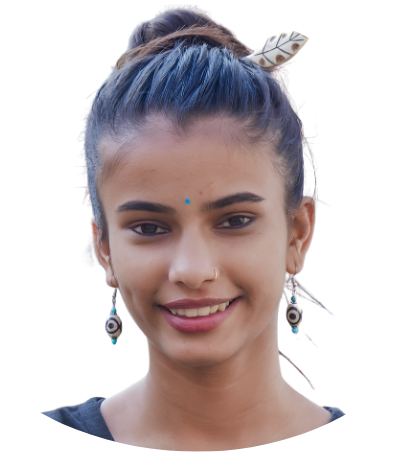
I grew up in the hills of Sindhupalchok, where the air carries the names of those who left and never returned. My grandmother told stories with her hands. My father told them through silence. I learned early that every person is a world, and every world deserves a witness.
Journalism found me before I found it. At eighteen, I began writing for a local newspaper — local meaning the kind of paper that covers village council meetings, crop failures, missing children, and the price of tomatoes. It was the most important writing I have ever done.
“I don’t separate my journalism from my performance work. They are both acts of translation — turning experience into something another person can enter.”
Over the past decade, I have reported on post-earthquake reconstruction failures, the labour migration crisis in the Gulf, women’s land rights, and the shifting ecology of high-altitude communities. My work has appeared in The Kathmandu Post, Al Jazeera, The Wire, and various international publications. In 2022, I was named a South Asia Human Rights Fellow.
Performance art entered my life in 2016, when I was covering a protest and realised I was also part of it. The distinction between observer and participant collapsed. I began making work that asked: what does a body know that a notebook cannot record? My performances are long, slow, and uncomfortable — often for me as much as the audience.
Activism is not a hat I wear on weekends. It runs beneath everything. I sit on the advisory board of Feminist Dalit Organisation Nepal, and I have been involved in campaigns around press freedom, indigenous land rights, and anti-caste discrimination. I believe journalism and art are forms of power. Like all power, they come with obligations.
I am slow. I believe in spending more time with a source than any editor is comfortable with. I take notes by hand. I read poetry before I write anything. I try to approach every story as if the person at its centre has something to teach me — because they always do.
My performances emerge from research: archival, embodied, conversational. I am interested in duration, repetition, and failure. I am not interested in spectacle for its own sake. The best work I have made has been witnessed by twelve people in a room that smelled of incense and damp cement.
Three Hats, One Practice
Investigative and long-form reporting on displacement, labour migration, women's rights, and ecological change. Committed to slow journalism in an era of fast takes.
Site-specific, durational, and relational works that investigate what the body knows and archives. Interested in endurance, silence, and collective witnessing.
Performance Artist